

Solutions TMS
A transport management system that ends at proof, not at dispatch.
Orders in, optimised routes out, live execution in the middle, and an electronic proof of delivery (ePOD) against every order at the end. That is the whole transport cycle in one system.
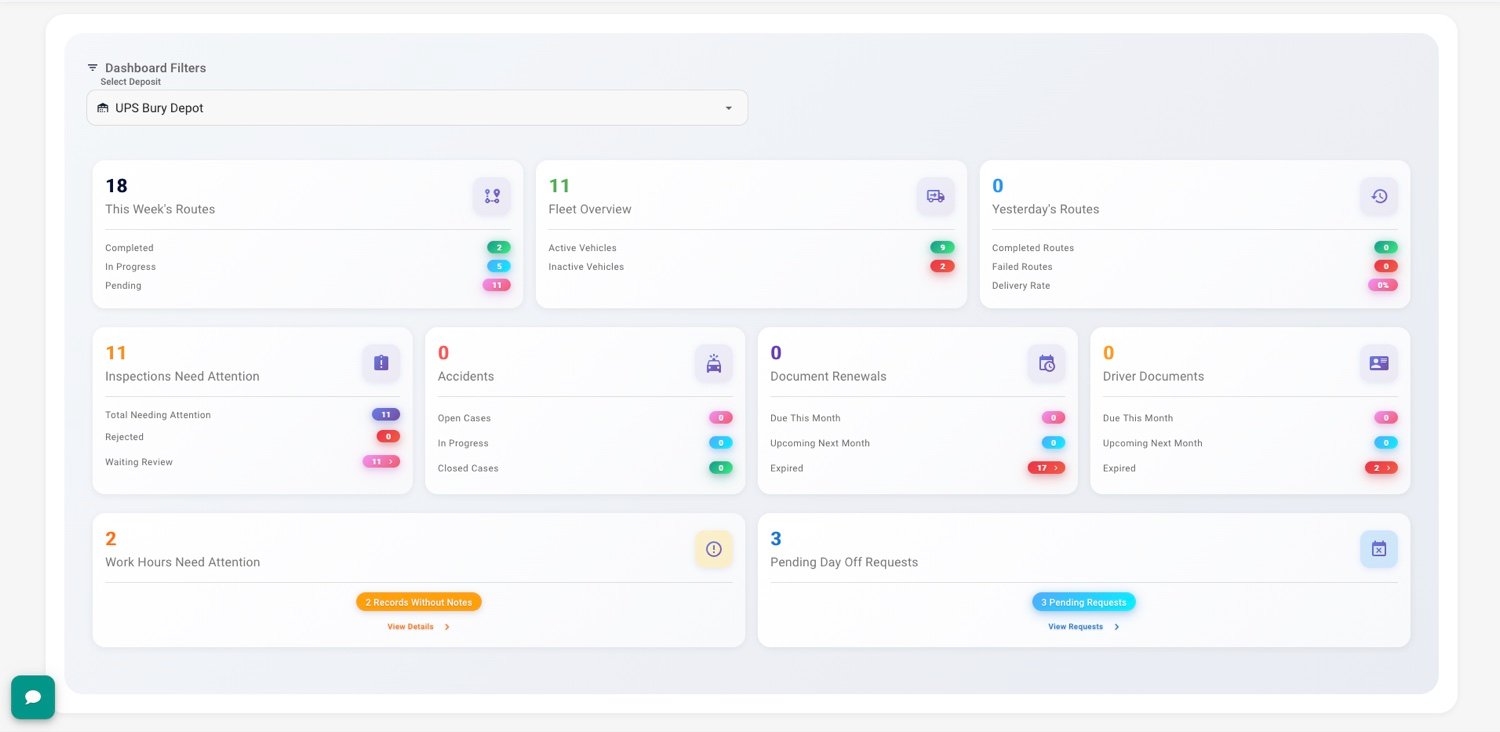

What one system replaces.
One record per order
From import to signature, every event lands on the same order record. No reconciling three tools.
The fleet, one screen
Vehicles, drivers, routes and exceptions on one board, live.
Costs land where they belong
Deliveries, reattempts and failures are reported per route, driver and customer.
Fits the systems you have
CSV and spreadsheet import today, REST API and webhooks when you are ready to connect the ERP.
Built for operations, not just orders.
Depots, driver schedules, vehicle capacities and recurring routes. The operational reality of a transport business is first-class data here, planned in one panel, not a workaround.
See the full feature list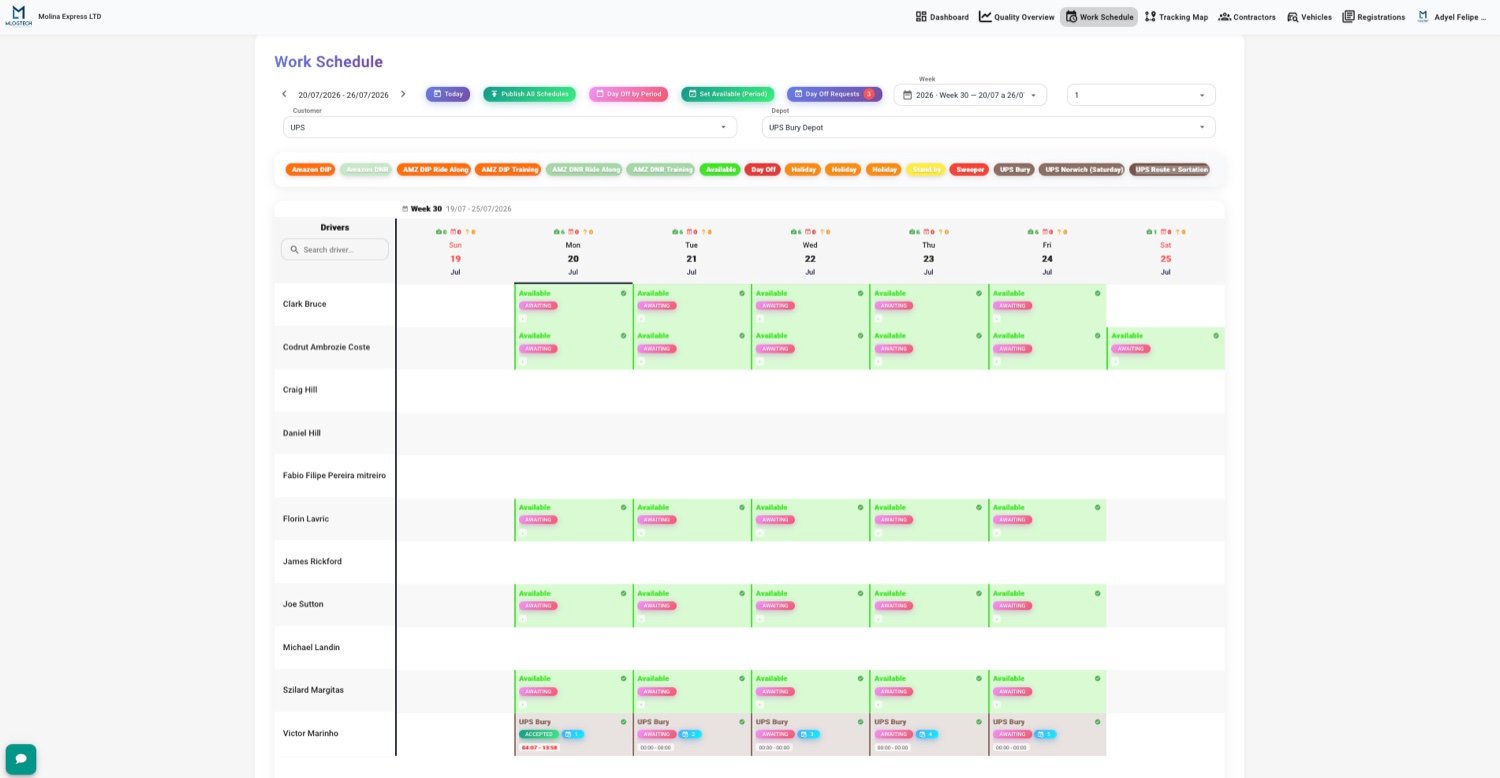
Reports your customers can receive.
Delivery performance per customer, exportable to your own tools. 3PL clients can watch their own orders through the customer portal instead of emailing you for updates.
More on the customer portal
The transport cycle in MLogTech.
- Step 1
Receive orders
Spreadsheet, portal entry or API from your ERP and e-commerce.
- Step 2
Plan and dispatch
Optimise across the fleet and publish routes to the driver app.
- Step 3
Execute with visibility
Live tracking, notifications and exception handling while vehicles are out.
- Step 4
Prove and report
ePOD closes every order; analytics report the operation per route, driver and customer.
What is a TMS and when do you need one?
A transport management system coordinates the movement of goods: which orders go on which vehicles, in what sequence, driven by whom, and what happened to each of them. It is the operational memory of a transport business.
Most operations start without one. Orders live in an inbox, planning lives in a spreadsheet, execution lives in phone calls, and proof lives on paper in the cab. That setup works until volume, staff turnover or a big customer audit exposes how much of the operation exists only in someone’s head.
The sign you need a TMS is not company size; it is reconciliation work. If someone spends part of every day matching what was planned against what happened, chasing PODs, or rebuilding yesterday from messages, the operation is already paying for a TMS without having one.
MLogTech is a TMS scoped to delivery operations: it deliberately ends every cycle with electronic proof of delivery, because an order without proof is not finished; it is just quiet.
Run transport as one system.
Import a real day of orders and see the cycle close.
- From login to a published route in under a minute
- Import orders from CSV or API
- Per-driver or per-order pricing
Common questions
What does TMS stand for?
Transport management system: the software that plans, executes and accounts for the movement of goods across a fleet.
How is MLogTech different from a generic TMS?
It is built for delivery operations and closes every order with electronic proof of delivery. Planning, driver app, tracking and ePOD are one product, not modules from different vendors.
Does it integrate with my ERP?
Orders can arrive by spreadsheet import or through the REST API and webhooks. Native connectors are rolling out; talk to us about your platform.
How much does a TMS cost?
MLogTech is priced per driver or per order volume, with no driver minimum. See the pricing page for plans.
Can it handle multiple depots?
Yes. Depots, vehicles, shifts and capacities are all part of the planning model.